
Straining to pee, or blood in the urine? We can help.
Bladder stones are common in dogs and cats, and can turn into a life-threatening blockage if left untreated. Our team uses in-house imaging and urinalysis to find and remove stones quickly — with a stress-free experience for pets and pet parents alike.
When to act right now.
A blocked urinary tract can turn serious quickly, so trust your gut and make the call. Here's the simple version:
Call us now if
- They're straining, or making frequent attempts to urinate
- You notice blood in their urine
- They're vomiting or suddenly won't eat
- They seem lethargic or uncomfortable in the belly
Go straight to a 24/7 ER if
- Straining to urinate with little or no urine coming out
- Repeated vomiting or collapse
- Crying out or showing obvious pain when their belly is touched
Not sure which applies? Our emergency services page breaks down what we can treat and when the ER is the right call.
The usual causes.
Factors like age, diet, and genetics can make a pet more prone to bladder stones — which are typically made up of minerals, most often struvite or oxalate. Common underlying causes we check for:
Not sure what's behind it? A diagnostic workup identifies the type and likely cause — and points to the right treatment.
Symptoms that something's not right.
Watch for these signs of bladder stones in your dog or cat:
Why it can't wait: left untreated, bladder stones can obstruct the urethra — meaning a dog or cat can't get urine out at all. That's a life-threatening emergency. If you're seeing these signs, call us right away.
Diet, medication, or surgery — whichever fits.
Diagnosis combines a physical exam with imaging and urinalysis to confirm the size, location, and type of stone — see our in-house lab & imaging for how that works. From there, treatment depends on the case.
Diet & medication
For certain non-obstructive stonesSome types of bladder stones can be dissolved with a special diet or medication instead of surgery — though this approach only works for certain cases.
- Works for select stone types only
- Close monitoring confirms it's working
- Non-surgical, but not the right fit for every case
Surgical removal
For obstructive or damaging stonesWhen stones are already obstructing the urinary tract or damaging it, surgical removal is recommended — and it's highly treatable.
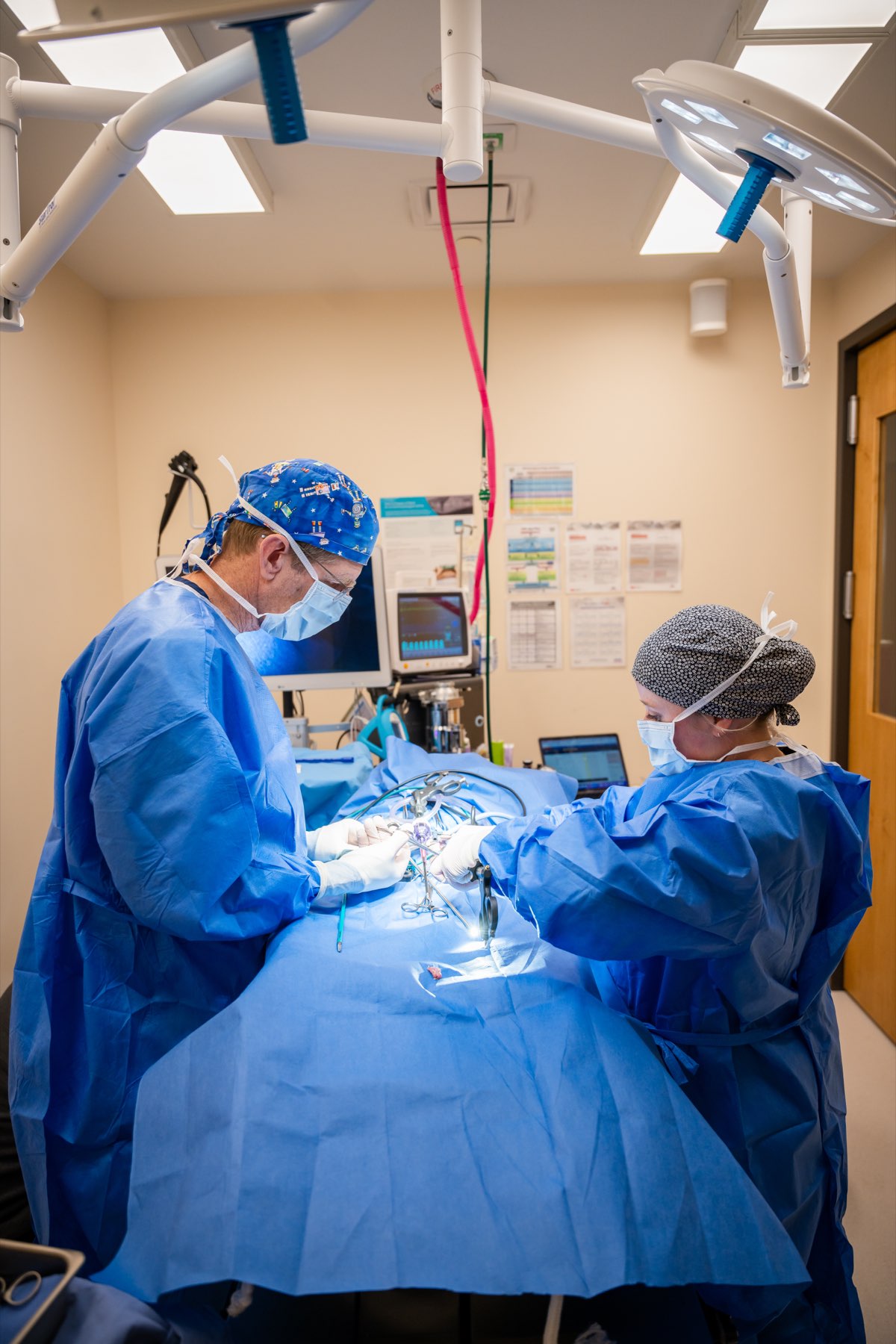
- Performed under anesthesia by our experienced surgical team
- Around an hour or less on average, depending on how many stones there are
- Live updates by text, photo, and video while you wait
Bladder stone removal, start to finish.
From the first exam to the ride home, here's how it goes:
Exam, bloodwork & imaging
A full physical exam and bloodwork confirm your pet is ready for anesthesia. Imaging — X-rays, ultrasound, or contrast imaging — shows us the size and location of the stones.
A clear plan
Your vet reviews the imaging, walks you through the safest next step, and gives fasting instructions for the night before (water is always fine). You'll know the plan and the cost before anything is scheduled.
Procedure day
You drop your pet off, and they stay with us through the procedure and a quiet recovery from anesthesia. We send live updates by text, photo, and video the whole way.
Pick-up & aftercare
Before you head home, our team reviews the treatment plan with you and sends your pet home with any medications they need.
Lowering the risk of it coming back.
Bladder stones can recur if the underlying cause isn't addressed. A few things help:
- The vet-recommended diet for your pet's specific stone type
- Plenty of fresh water to keep them well hydrated
- Any other instructions your veterinarian gives you
- Regular wellness exams to catch a recurrence early
After the first removal, we can test the stones to confirm the type and the most likely cause — genetics in some cases, an underlying condition like a UTI in others.
That's what shapes the right prevention plan for your pet, from a diet change to more frequent monitoring.
Part of our full surgery service.
Bladder stone removal is one of many procedures our surgical teams perform — see how we approach surgery at Sploot, from the consult to recovery.
Financing made simple with CareCredit.
Pet healthcare expenses can come at unexpected times — and bladder stone removal is rarely planned. That's why we accept the CareCredit® credit card, a flexible financing solution with promotional financing options on purchases of $200 or more.
- See if you prequalify in seconds — with no impact to your credit score
- Reusable for future visits at any Sploot clinic
- Pay over time with convenient monthly payments*
*Subject to credit approval. See carecredit.com for details. See our full financing options.


Bladder stone removal FAQs, answered.
What are bladder stones in dogs and cats?
Bladder stones, also known as urinary calculi or uroliths, are mineralized formations that can develop and get stuck in the urinary bladder of dogs and cats.
What causes bladder stones in pets?
The main cause is an over-saturation of minerals in the urine. That oversaturation can be tied to other factors, such as genetics, liver disease, and diet.
Are certain breeds more prone to bladder stones?
Several breeds are particularly prone to developing bladder stones. For dogs, that includes Labrador Retrievers, Dachshunds, Shih Tzus, and Bichon Frises. For cats, susceptible breeds include Ragdolls, Burmese, and Himalayans.
Breed isn't the only factor that determines susceptibility, though — if you suspect your pet may have bladder stones, it's best to consult with a veterinarian.
Can bladder stones cause a life-threatening blockage?
Yes — bladder stones can become a life-threatening medical emergency, especially once the condition has developed over time and is posing a major blockage in the urinary system.
How are bladder stones diagnosed?
Our veterinarians use imaging techniques, urinalysis, and urine culture to diagnose bladder stones. Together, these help determine the extent of stone formation, where the stones are, and the type present. Routine wellness exams also help catch bladder stones early, before symptoms progress.
Can bladder stones dissolve on their own without surgery?
Certain types of bladder stones can be dissolved using a special diet or medication, but this approach only works for certain cases. For stones that are already obstructive or damaging the urinary system, surgical removal is recommended.
How long does bladder stone removal surgery take?
On average, a bladder stone removal surgery takes around an hour or less. That time may extend depending on how many stones need to be removed.
Does my pet need a pre-surgical consultation?
Yes. A pre-op appointment is what ensures a safe and successful bladder stone removal. At this appointment, our veterinarians also set expectations for the procedure and the post-operative care your pet will need.
Are there risks with bladder stone removal surgery?
As with any veterinary surgery, there are risks — including anesthesia complications, infection, and bleeding. It's common for urine to be slightly tinged with blood for a few days afterward; if you're uncertain whether the color is normal, or you see blood clots or other concerning changes at the surgery site, reach out to our team. Experienced vets work to minimize these risks and set pet parents up with clear post-surgical wound care.
What's recovery like, and how can I support my pet?
Because every case is different, recovery time depends on the complexity of the procedure — our veterinarian will tell you more about what to expect for your pet.
In general: give prescribed medications on time, limit their activity, follow any dietary restrictions, and keep them in a calm space to rest. Our pet parent concierge is there to help with any questions along the way.
Can bladder stones come back after they're removed?
There is a risk of recurrence if the underlying cause isn't addressed. Following the recommended diet, keeping your pet well hydrated, and sticking with any other instructions from your veterinarian all help. Regular wellness exams also help catch a recurrence early, should it happen.
How much does bladder stone removal cost?
The cost depends on the extent of the procedure. We offer fully transparent pricing once your pet's bladder stones are diagnosed, so you have a clear estimate before anything is scheduled. Reach out to our team to learn more.
Do you accept pet insurance?
If bladder stone removal is covered under your pet's insurance, you may be able to file for reimbursement from your provider. Coverage varies by plan, so check with your provider to confirm.
What payment options does Sploot accept?
Sploot only accepts cashless payments. We happily accept all major credit and debit cards, along with CareCredit and ScratchPay.

Don't wait on a bladder stone problem.
If your dog or cat is showing signs of bladder stones, don't wait and wonder. Call or book now — our clinics in Denver, CO and Chicago, IL take same-day appointments and walk-ins, 365 days a year.