
Dog & cat vaccinations for a long, healthy life.
Staying on top of vaccinations is an essential step in preventing serious transmissible diseases in cats and dogs — and one of the simplest ways to add healthy years to your pet's life.
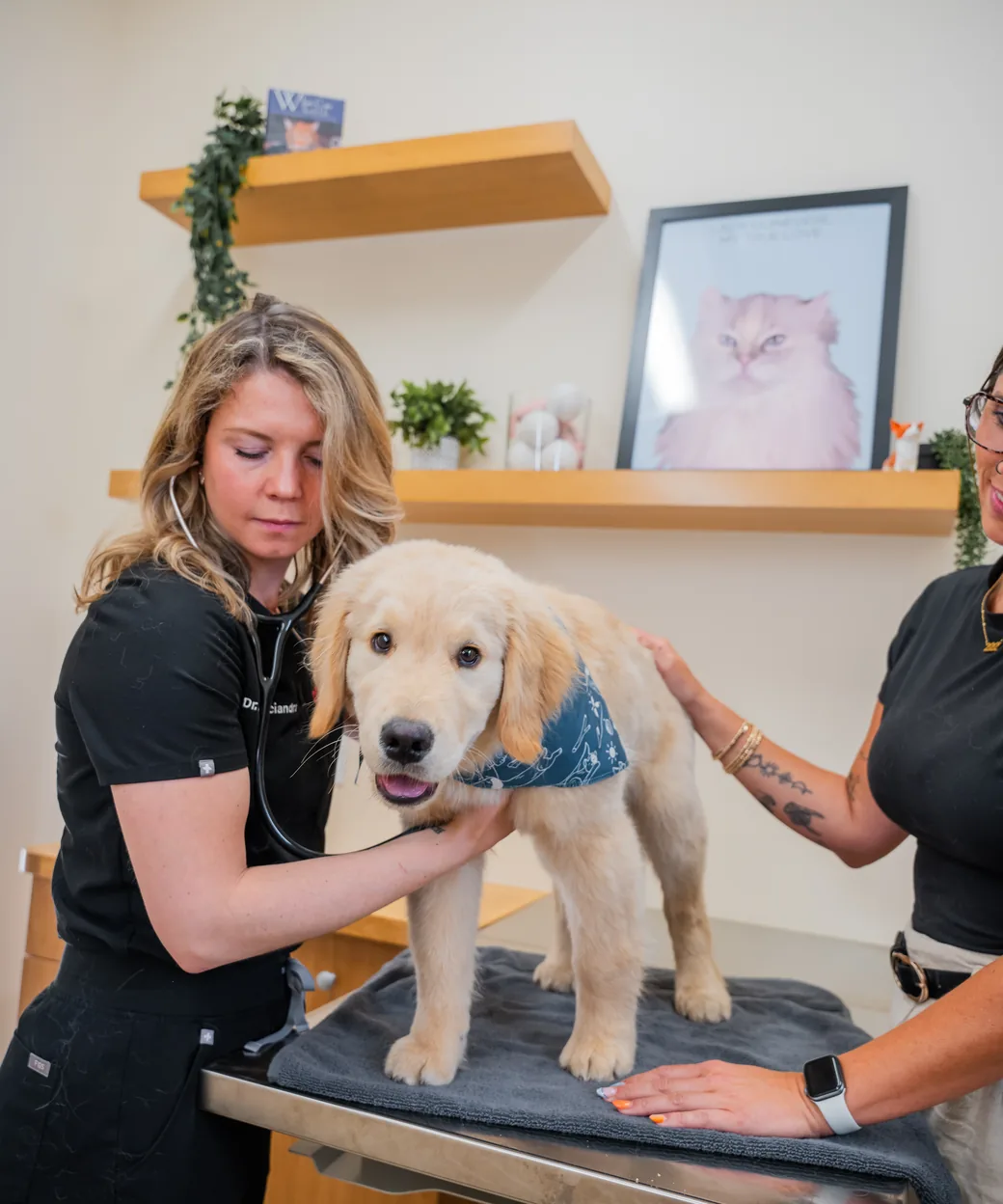

A small shot with big protection.
Many of the diseases vaccines prevent are life-threatening, leave lifelong complications, or spread easily between animals — and a few can even reach your family. Vaccination stops them before they start.
A healthier life
Your pet is protected from diseases with life-threatening symptoms or lifelong complications — many of which have no easy cure once caught.
Safer socialization
Dog parks, daycare, boarding, the great outdoors — a fully vaccinated pet can explore and make friends with far less risk.
Protection for your family too
Some diseases vaccines prevent — like rabies and leptospirosis — are transmissible to humans. Vaccinating your pet helps keep the whole household safe.
Your pet's vaccine schedule, at a glance.
Following a proper puppy or kitten shot schedule ensures your pet builds protection at the right developmental stages. Vaccines fall into two categories:
Recommended for all pets — they prevent serious diseases such as rabies, distemper, and parvovirus in dogs, or rabies and panleukopenia in cats.
Given based on lifestyle factors such as socialization, outdoor exposure, and boarding or daycare attendance. Your vet will help you decide.
Core vaccines
| Vaccine | Age to start | Initial vaccination | Revaccination |
|---|---|---|---|
| DAPP | 6–8 weeks | 3–4 shots, 2–4 weeks apart (last at or after 16 weeks) | Every 1–3 years, depending on vaccine history |
| Rabies | 16 weeks | 1 shot (good for one year) | Every 1–3 years, depending on vaccine history and age |
| Leptospirosis | 12 weeks | 2 shots, 2–4 weeks apart | Yearly |
Recommended vaccines*
| Vaccine | Age to start | Initial vaccination | Revaccination |
|---|---|---|---|
| Bordetella | 8 weeks | One dose, intranasal or oral | Yearly |
| Canine influenza | 12 weeks (can vary — ask your vet) | 2 shots, 2–4 weeks apart | Yearly, or every 6 months if at high risk (boarding, daycare, dog parks) |
| Lyme | 12 weeks | 2 shots, 2–4 weeks apart | Yearly |
Core vaccines
| Vaccine | Age to start | Initial vaccination | Revaccination |
|---|---|---|---|
| FVRCP | 6–8 weeks | 3–4 shots, 2–4 weeks apart (last at or after 16 weeks) | Every 1–3 years, depending on age and vaccine history |
| Rabies | 16–20 weeks | 1 shot (good for one year) | Every 1–3 years, depending on age and vaccine history |
Recommended vaccine*
| Vaccine | Age to start | Initial vaccination | Revaccination |
|---|---|---|---|
| Feline leukemia (FeLV) | 8–12 weeks | 2 shots, 2–4 weeks apart | Yearly |
*Vaccine recommendations vary based on location, lifestyle, and risk factors. Consult your veterinarian for personalized guidance.
About boosters: booster shots are needed at different intervals depending on your pet's age, prior vaccinations, and risk factors. Puppies and kittens typically need yearly boosters, while adult pets may be eligible for 3-year rabies vaccinations depending on state laws and veterinary recommendations. We'll map out your pet's individual timeline at your next visit.
Dog vaccines, decoded.
What each shot actually protects your dog against — and when it starts.
Rabies
Protects against rabies — a deadly viral infection with a 99% mortality rate, transmissible among dogs, cats, and wildlife like raccoons, bats, and foxes. Rabies can also spread to people.
DAPP
One vaccine, four diseases: canine distemper (a potentially fatal virus targeting the respiratory, gastrointestinal, and nervous systems), canine hepatitis (a liver disease that can become a chronic, lifelong issue), parvovirus (a highly contagious GI disease that requires hospitalization), and parainfluenza (a contagious respiratory virus).
Leptospirosis
Protects against leptospirosis, a bacterial disease that can spread from animals to people. Dogs that swim in rivers or lakes, roam rural properties, or cross paths with wildlife and rodents are most at risk — but suburban and city dogs can be exposed too.
Bordetella
Protects against kennel cough — a disease marked by a dry, hacking cough that spreads through airborne droplets to other dogs, cats, and in some cases, people.
Canine influenza
Protects against canine influenza, a contagious viral disease that affects your dog's respiratory system.
Lyme disease
Protects against Lyme disease, a tick-borne bacterial disease that greatly affects the joints and kidneys — left untreated, it can lead to kidney failure, arthritis, neurological issues, and heart problems.
*Recommended based on breed, lifestyle, location, and other risk factors. Want to go deeper? Read The Ultimate Pet Parent's Guide to Dog Vaccines — and if you've just brought home a puppy, grab Puppies 101.
Cat vaccines, decoded.
Fewer shots, same idea — here's what protects your cat, indoors or out.
FVRCP
One vaccine, three diseases: feline panleukopenia (feline distemper — a contagious, life-threatening virus that targets multiple body systems), feline herpesvirus (an upper-respiratory infection carried for life), and feline calicivirus (an upper-respiratory infection that can also be carried for life).
Rabies
Protects against rabies — a deadly viral disease with a 99% mortality rate, transmissible among cats, dogs, raccoons, foxes, bats, and other wildlife. Rabies can also spread to people.
Feline leukemia (FeLV)
Protects against feline leukemia virus infection, a viral disease that targets the immune system and blood-forming tissues — and is known to shorten a cat's lifespan.
*Recommended based on breed, lifestyle, location, and other risk factors. Can't get enough? Read The Ultimate Pet Parent's Guide to Cat Vaccines — or download Kittens 101 for new kitten parents.
Wherever your pet is starting from.
First shots, overdue shots, or a mystery history — there's a clear path back to protected.
Puppies & kittens
Building immunity early- Vaccinations start at 6–8 weeks old
- Most vaccines take multiple doses to ensure full protection
- Following the recommended shot schedule sets them up for lifelong health
Adults with prior vaccinations
Staying on schedule- We review past vaccination records to determine the next steps
- If your pet is up to date, a booster may not be necessary yet
- Some vaccines, like rabies, need revaccination every 1–3 years based on state laws
Missed shots or unclear history
Back on track, safely- Restarting the vaccine series may be required — it's safe and simple
- In some cases, a blood test (titer test) can check existing immunity
- Your vet will recommend the best schedule based on age and health
Your vaccine visit, start to finish.
%20(1).jpg)
Book in a few clicks
Schedule days, weeks, or months in advance — or grab a same-day appointment or urgent drop-off if your pet needs care now.
A quick exam first
Your vet checks your pet over and confirms they're healthy enough to vaccinate — we don't recommend vaccinating a pet that isn't feeling well.
Vaccines, done gently
Our veterinary team administers whatever's due — core and any recommended vaccines — in the same visit, handled with plenty of treats and patience.
Records & reminders
We keep your pet's complete vaccination record, and our Pet Parent Concierge team can answer questions about what's due next — anytime.
10% off vaccines — and everything else.
Members save an average of $600+ a year*. If you're keeping your pet's shots on schedule anyway, the membership basically pays for itself.
- 10% off vaccines, bloodwork, meds, and everything else
- 3 free exam visits a year ($267–$297 value)
- 15% off ALL dental services
- 25% off spay/neuter procedures
*Estimated average annual savings; actual savings vary by pet and services used.


Dog & cat vaccinations, answered.
Why do dogs and cats need vaccinations?
Vaccinations protect dogs and cats from diseases that can be fatal or leave lifelong repercussions. And because puppies and kittens are more prone to acquiring these diseases — and tend to have more serious symptoms than adult pets — early vaccination is strongly recommended.
Are pet vaccinations required by law?
It depends on where you live. Some states, like Illinois, have statewide laws requiring rabies vaccination for dogs and cats. Colorado has no statewide law — but individual municipalities can still have ordinances, and Denver requires dogs and cats to get rabies shots. When in doubt, check both your state's laws and your city's ordinances.
Some states and municipalities allow exemptions for medical reasons, though these generally require a veterinarian's certification.
How often should pets be vaccinated?
Each vaccine follows its own schedule for the initial shot, boosters, and revaccination — and the vast majority of vaccines need regular maintenance to stay effective. Our veterinarians will recommend a vaccination schedule best suited to your pet's age, history, and lifestyle.
Do vaccines have side effects?
Vaccines are designed to stimulate the immune system, so it's normal for cats and dogs to experience mild symptoms afterward — decreased energy, a slight fever, decreased appetite, and mild discomfort. This can last for a couple of days while their immune system responds to the vaccine.
What are the signs of an adverse reaction to a vaccine?
Vaccinations are safe for the vast majority of dogs and cats, but in rare cases a pet may react adversely. Reach out to our team immediately if you notice itchy or bumpy skin, hives, facial swelling, persistent diarrhea or vomiting, severe coughing or breathing difficulties, or collapse.
Can my pet be vaccinated if they're already sick?
We don't recommend vaccinating a dog or cat that isn't healthy. If your pet is showing symptoms like fever, lethargy, sneezing, coughing, or vomiting, it's best to bring them in for a check-up first so they can get the appropriate treatment.
Can senior pets be vaccinated?
Yes — senior pets can still benefit from regular vaccinations. Senior cats and dogs may be given different vaccination schedules depending on their individual needs.
What is a vaccine titer test for dogs and cats?
A titer test measures the level of antibodies a pet has against a disease — in other words, their existing immunity. For healthy pets with an unclear vaccination history, veterinarians typically just recommend restarting the series, which is safe and hassle-free. But when there's some risk tied to vaccinating, or when proof of immunity is required (such as for travel to some countries), a titer test helps determine whether revaccination is absolutely necessary.
Can vaccinations be administered at home?
Vaccinations should be administered by a licensed veterinarian to ensure the proper storage, handling, and administration of the vaccines.
How can I keep track of my pet's vaccination records?
We keep a complete record of your pet's vaccinations, and if you have questions about what's pending, our Pet Parent Concierge team can get you answers easily. We still encourage pet parents to keep their own copy for personal reference.
What payment options are available at Sploot?
We only accept cashless payments to keep our clinics and clients safe — any major credit or debit card, plus CareCredit and ScratchPay. And if vaccinations are covered by your pet's insurance or wellness plan, you may be able to claim reimbursement from your provider.

Protection worth staying on top of.
Book a vaccination appointment at any of our vet clinics in Denver, Chicago, Colorado Springs, or Salt Lake City — open 8AM to 8PM, every day of the year.