
Found a new lump? Here's what it means.
A "mass" is simply a lump under your pet's skin — and for dogs and cats, they can be benign or malignant. Our vets examine, classify, and if needed, safely remove masses in our dedicated surgical suites.
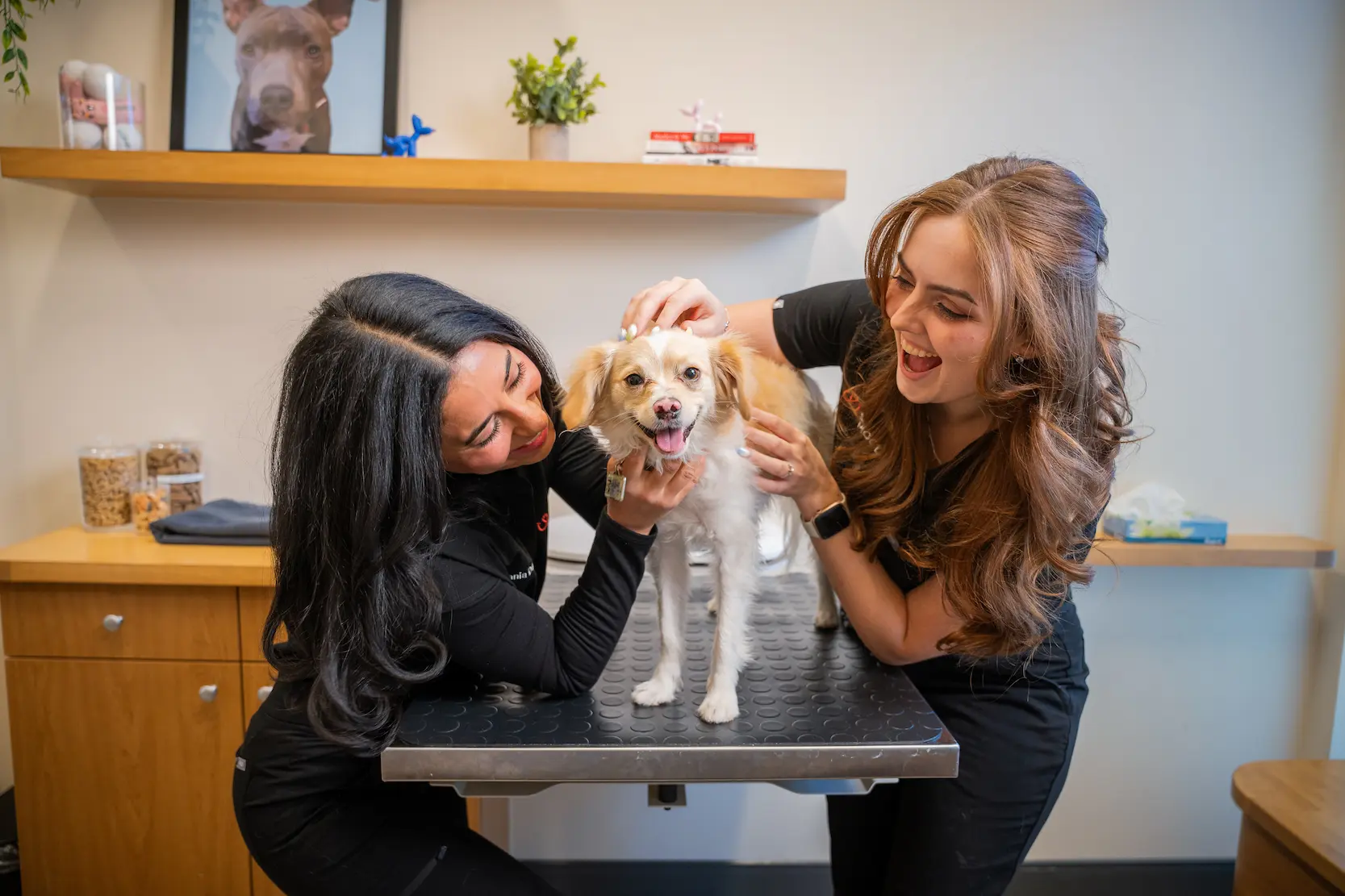
A lump doesn't always mean the worst.
There are a lot of reasons a mass can show up on a dog or cat — and just as many reasons it's worth having one checked.
Many possible causes
Lumps can come from a blocked hair follicle, a bacterial infection, a non-cancerous growth, or a cancerous one. The only way to know which is to have it examined.
More common as pets age
Masses can appear at any age, but fatty lumps (lipomas) — and malignant lumps — both become more common in older dogs and cats.
Diet, lifestyle & genetics play a role
These factors all influence whether a pet is more or less likely to develop a benign or malignant mass.
Benign or malignant — what to look for.
Pet parents usually notice a mass by feel, on the skin or a little deeper. Here's a general guide to what different types tend to feel like.
Fatty lumps (lipomas)
- Round, oval, or bulging
- Soft and squishy
Sebaceous cysts
- Small, raised, wart-like bump
- Hard or fluid-filled
Abscesses
- Swollen and pus-filled
- Soft to a bit firm
Cancerous (malignant) masses
- Appearance varies widely
- Often firm or hard to the touch
Here's the honest part: benign and malignant masses can look and feel exactly the same. The only way to tell them apart for certain is by examining the cells — which is exactly why it's always worth having a new mass checked out.
Getting to a real answer.
Two exams do the work here — one before surgery to guide the decision, one after to confirm it. Both look at your pet's cells, not just the surface.
Before surgery: fine needle aspirate
Cytology — a cellular examA quick, minimally invasive sample is collected from the mass and examined under a microscope. This cytological exam helps our vets detect signs of malignancy before recommending surgery.
- Done as part of your pet's pre-surgical consultation
- Helps guide whether — and how urgently — removal is recommended
After surgery: histopathology
Tissue-level examOnce a mass is removed, it goes to further tissue (histopathological) examination — the only way to conclusively diagnose it and determine what, if anything, comes next.
- Confirms benign vs. malignant with certainty
- Guides any follow-up care your pet may need
Both exams sit alongside the rest of your pet's workup — bloodwork and imaging included. See our lab tests & diagnostics page for the full picture.
Mass removal surgery, start to finish.
From the pre-op consult to the ride home, here's how it goes:
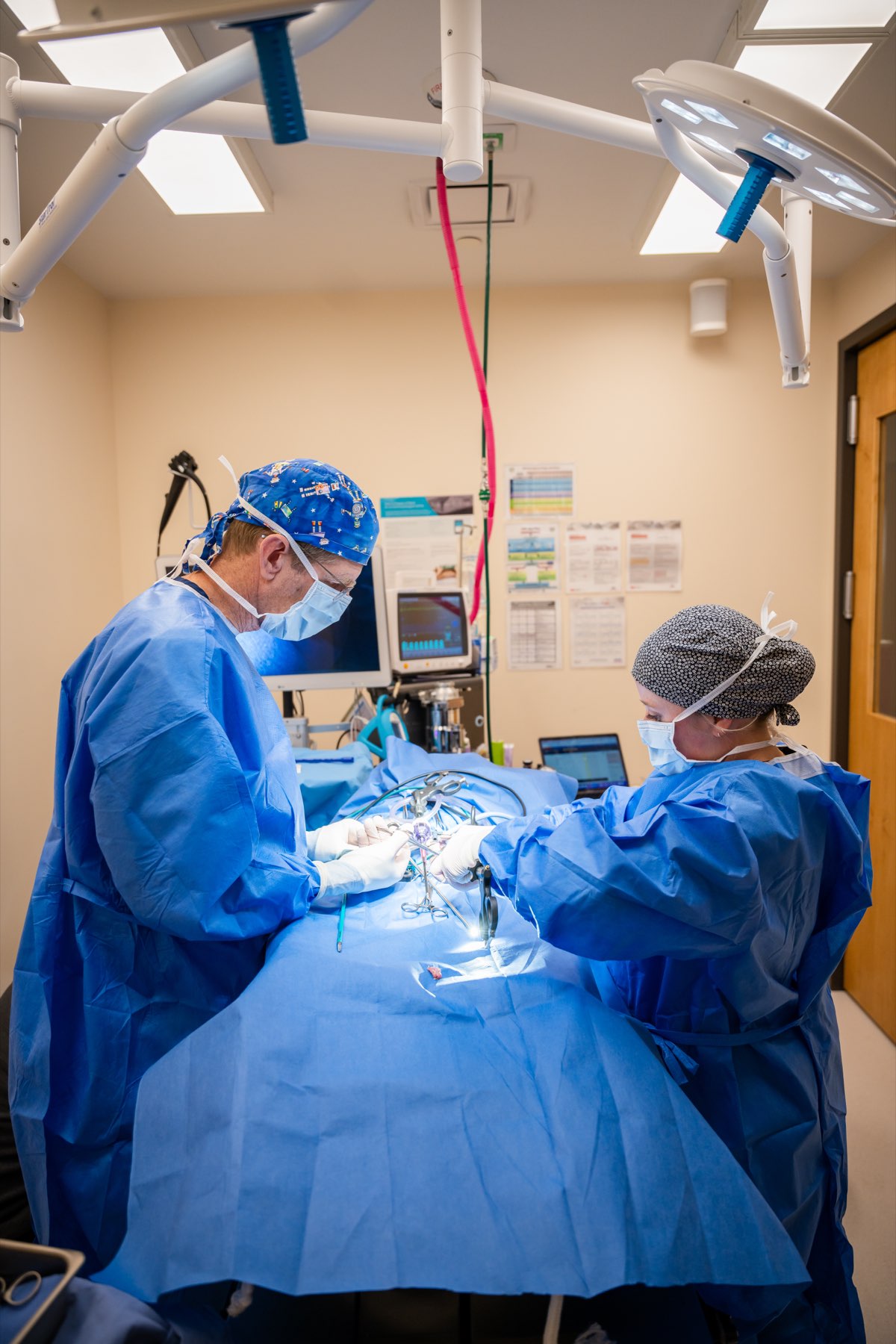
Pre-op exam & imaging
A full physical exam and bloodwork confirm your pet is medically fit for surgery. Imaging may also be used to see the mass's exact location and extent.
A clear plan
We'll walk you through the procedure and the post-op care your pet may need, plus fasting instructions for the night before — water is always fine, any time.
Surgery day
You drop your pet off on the day of the procedure. They stay with us through surgery and while they recover from anesthesia, with live updates by text, photo, and video along the way.
Recovery & home
Once they're ready, we'll let you know it's time to pick up, walk you through the post-op treatment plan, and send you home with any medications your pet needs.
Caring for them during recovery.
Every pet recovering from surgery needs a similar routine — here's what to keep an eye on:
- Medications on time, exactly as prescribed
- Wound care and any diet changes as directed
- Limited activity and a calm place to rest
- A cone or onesie so they can't lick or scratch the incision
Notice any unusual swelling, discharge, or other changes? Call our team — we're always here to help you figure out next steps.
It's possible — especially if the removed mass was malignant. Benign masses, like lipomas, are less likely to recur.
Based on what's removed, our vets will advise on any lifestyle changes or ongoing care that can help lower the odds of a new one forming.
Part of our full surgery service.
Mass removal is one of many procedures our surgical teams perform — see how we approach surgery at Sploot, from the consult to recovery.
Financing made simple with CareCredit.
Pet healthcare expenses can come at unexpected times — and a new mass is rarely planned for. That's why we accept the CareCredit® credit card, a flexible financing solution with promotional financing options on purchases of $200 or more.
- See if you prequalify in seconds — with no impact to your credit score
- Reusable for future visits at any Sploot clinic
- Pay over time with convenient monthly payments*
*Subject to credit approval. See carecredit.com for details. See our full financing options.


Mass & tumor removal FAQs, answered.
What is mass removal surgery for dogs and cats?
Mass removal surgery refers to the surgical procedures that remove an abnormal growth — benign or malignant — from under a dog or cat's skin.
Why would my pet need mass removal surgery?
It's typically recommended when a mass is suspected to be malignant, and/or when it's causing discomfort or pain. After removal, any mass suspected of malignancy undergoes tissue (histopathological) examination so we can reach a conclusive diagnosis.
Are all masses in pets cancerous?
No — plenty of masses are benign (non-cancerous). That said, if a benign mass is causing your pet discomfort or pain, we may still recommend removing it.
Can mass removal surgery cure cancer in pets?
It depends mainly on the stage of cancer your pet has. In some cases, complete removal of the cancerous mass leads to recovery; in others, additional treatments like chemotherapy or radiation therapy may be needed.
Can pets have multiple masses removed during a single surgery?
Yes — it's possible to remove multiple masses during a single surgery.
Does my pet need a pre-surgical consultation?
Yes. A pre-op appointment is a vital first step to make sure masses are removed successfully and safely. Our vet will assess your pet's health, locate the mass or masses, and, if surgery is recommended, confirm your pet is a safe candidate — plus walk you through the procedure and the post-op care they'll need.
How long do mass removal surgeries take?
It varies — anywhere from a few minutes to over an hour, depending on how extensive and how deep the masses are.
Are there risks associated with mass removal surgery?
Like any type of veterinary surgery, there are risks involved, such as anesthesia complications and wound infection after surgery. Our experienced vets take steps to reduce these risks and set pet parents up to give great post-operative care once their dog or cat is home.
Can mass removal surgery be performed on elderly pets?
Yes — as long as their overall health is deemed safe for surgery. Our vets determine this with a thorough physical exam and bloodwork before recommending any type of surgery.
Can the removed mass be tested for cancer?
Yes. If a mass is suspected to be malignant, it will be tested using histopathological evaluation — the only conclusive way to diagnose a mass in dogs and cats.
Will my pet need stitches after mass removal surgery?
Yes — stitches or sutures are used to close the incisions made during mass removal surgery.
How long does it take for pets to recover from mass removal surgery?
Recovery time depends on the extent of the procedure, your pet's overall health, and the post-operative care they get. Generally, it can take a few weeks for pets to recover fully.
In most cases, pets go home the same day as the procedure, though each case is different — our vet will set clear expectations for yours.
Are there specific precautions I should take during my pet's recovery?
When it's time for your pet to go home, our vets will give instructions on medications, wound care, and possibly diet changes. In general, every pet needs a calm place to rest, limited physical activity, and — often — a cone or onesie to keep them from licking or scratching the incision.
We advise pet parents to keep an eye on their pet after surgery and reach out to our team if they notice anything unusual.
Can pets develop new masses after mass removal surgery?
It's possible — especially if the removed mass was diagnosed as malignant. Benign masses, like lipomas in older dogs, have a lower chance of recurrence. Our vets can advise on lifestyle changes or ongoing care that may help.
How much does mass removal surgery cost?
Cost depends on the extent of the procedure. With Sploot, you can expect transparent pricing from the start — reach out to our team to learn more.
Do you accept pet insurance?
If mass removal is included in your pet's insurance coverage, you may be able to claim reimbursement from your insurance provider. Coverage varies by plan, so check with your provider to confirm.
What payment options does Sploot accept?
Sploot only accepts cashless payments. We happily accept all major credit and debit cards, along with CareCredit and ScratchPay.

The sooner it's checked, the simpler it is.
If you've found a new lump on your dog or cat, don't wait and wonder. Call or book now — our clinics in Denver, CO and Chicago, IL take same-day appointments and walk-ins, 365 days a year.